~ Lexington ~
& Concord 19 April 1775
|
Rebel leaders knowing they did not have anything like a consensus amongst the colonists for them to seize control, started organising
gangs of thugs to intimidate isolated government officials and royalists, particularly in New Hampshire and Massachusetts. Intimidation quickly turned to persecution, which included all sorts of torture, one form widely used was 'smoking’ (leaving someone tied up in a sealed room overnight with a fire and a blocked chimney) only letting them out if they resigned their posts or signed a pledge opposing British authority. British soldiers were sent to protect citizens, but there were nowhere near enough of them to stop the rebel's random attacks, even staunch Loyalist areas became unsafe. In response various groups tried to organise a defence, but not being the malicious ruffians employed by the rebels they were nearly always met with overwhelming savagery, this caused a steady stream of families arriving in Boston, to the point of overcrowding, which then drove out rebel supporters. The majority of the colonists did not want the breakdown of law and order these gangs and their leaders would bring, so determined Loyalists covertly supplied the British with good intelligence, including that rebels were amassing small arms and cannon at Concord. Lt General Gage commander of British forces who thought with good reason that the rebels were sly, artful, hypocritical, and cruel, knew that any wrong move would spark a civil war, so wishing to avoid bloodshed, devised a counter revolutionary plan to confiscate the rebel’s stockpile of gunpowder, musket balls and cannons. The redcoats didn’t expect any hostilities and were confident of success so only took 35 rounds each, but Gage’s wife Margaret, an American, had conflicting allegiance (indicated by a lament to a friend 'Whoever wins, on that side shall I lose') so deliberately or unwittingly informed the rebels of the plan.
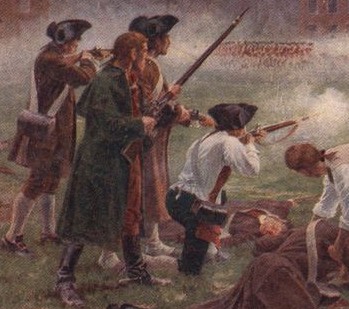
On route to Concord the 900 redcoats found approx. 70 armed men assembled on Lexington Green, who being no match for the British could only conceivably have been there if their Militia Capt. John Parker had been persuaded by rebel leader Samuel Adams (known to be there) to put on show of bravado. To avoid a possible confrontation however, Major Pitcairn of the leading British detachment confronted these men and convinced them to disperse, but just as doing so, shots were fired from behind a stone wall or from Buckman's Tavern, most likely orchestrated by wealthy smuggler Hancock (also there) and Samuel Adams, which had the effect they would have wanted of starting both sides firing at each other and killing several Militiamen. The British pressed onto Concord, but not knowing they had been betrayed and obviously finding nothing at Barrett’s Farm, started searching the surrounding area and colonist's homes. They did find 3 buried cannons that they knocked the trunnions off and a large number of musket balls they dumped in the river, but they also burnt the carriages for the cannon which inadvertently set fire to the town's council house. Although the soldiers and town's folk tired to save it, the smoke could be seen miles.
It was this that the rebels used to enrage other colonists and get them to attack the redcoats by claiming the town was being burnt to the ground.
The redcoats being heavily outnumbered were quickly out of ammunition and just as seriously they were also out of water, forcing
them to withdraw.
At Arlington redcoat discipline had broken down and anyone caught sniping at them from house windows (mainly women) were either bayoneted or had their homes burnt down. The Rebels planned aggression had killed/murdered 273 redcoats, but would have killed even more had Gage not been informed and able to send out a relief column under the command of Gen. Percy who deployed flankers that kept the rebel’s rolling sniper tactics at bay. Having provoked the conflict they wanted, wealthy rebels then chartered Quero, a fast schooner to race across the Atlantic empty and deliver their version of events blaming the British to English newspapers before Gage’s official report to ministers could arrive on a heavily laden merchant ship two weeks later.
The rebel propaganda had started its devious mudding of the water which confused the British response, so when Generals:
Howe, Clinton and Burgoyne (already on their way) arrived in Boston on May 25th they didn’t know what they were dealing with, resulting in them losing
many men at the battle of Breed’s (Bunker) hill on June 17th, becoming surrounded, beleaguered, eventually
having to vacate the city and with so very many Loyalists losing their property, the thieves had triumphed.
|
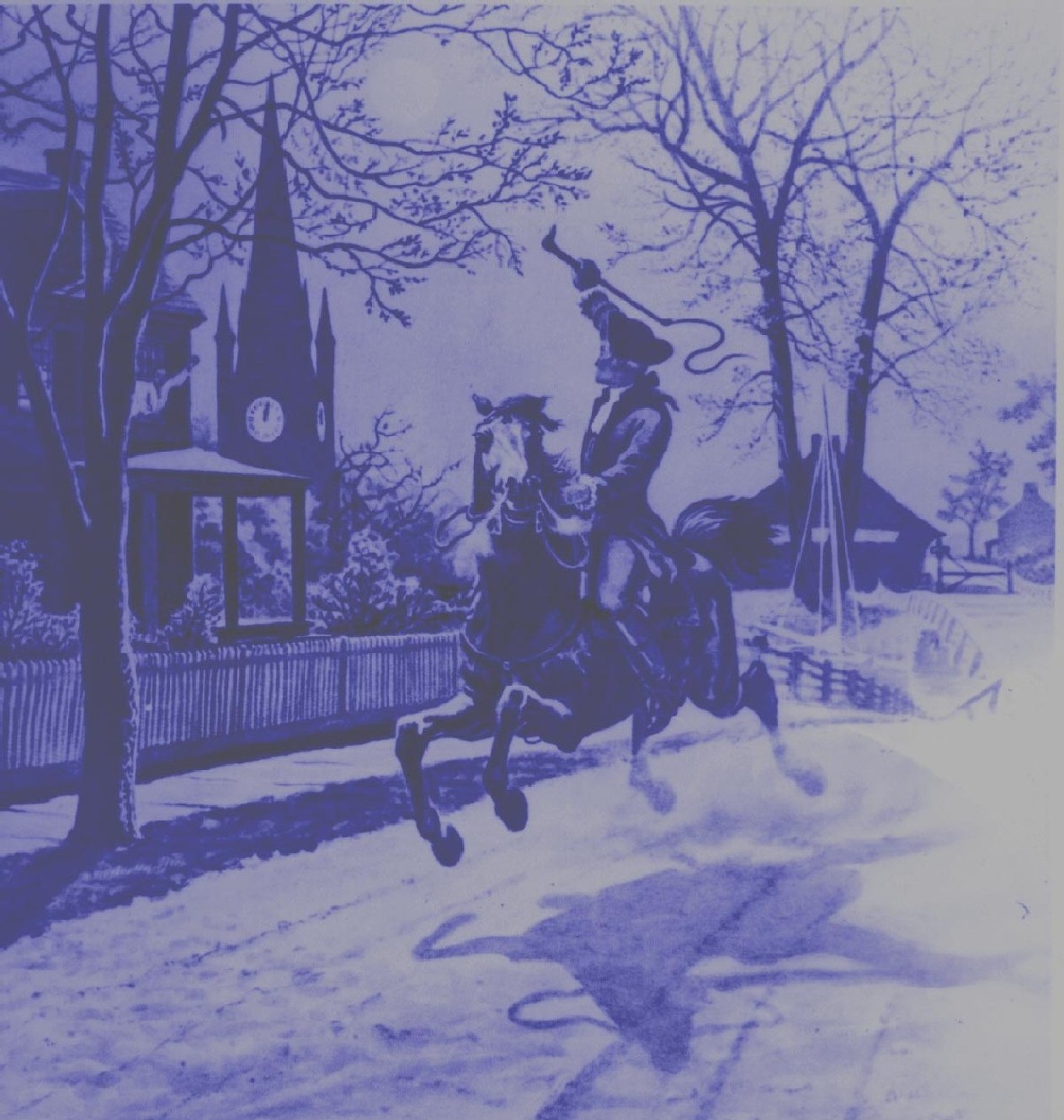 Folklore has credited Paul Revere with alerting Concord of the approaching regulars, but his horse had been confiscated at a British checkpoint
outside Lexington, it was Samuel Prescott who managed to get through and set off the rebel's warning system of other riders, (who Loyalists called
‘minutemen’) to have up to 3600 armed men from all over New England converge at Concord.
Folklore has credited Paul Revere with alerting Concord of the approaching regulars, but his horse had been confiscated at a British checkpoint
outside Lexington, it was Samuel Prescott who managed to get through and set off the rebel's warning system of other riders, (who Loyalists called
‘minutemen’) to have up to 3600 armed men from all over New England converge at Concord.
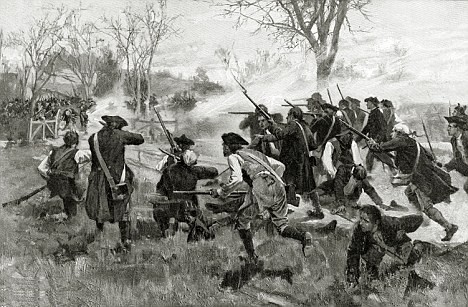 But on returning along the only road, they were like half dead fish in a barrel and were being decimated, wounded redcoats were set
upon to barbarically break their skulls, so they would live for an hour or so before expiring.
But on returning along the only road, they were like half dead fish in a barrel and were being decimated, wounded redcoats were set
upon to barbarically break their skulls, so they would live for an hour or so before expiring.